
Landmark reforms to tackle construction industry productivity
Published: 23 January 2026
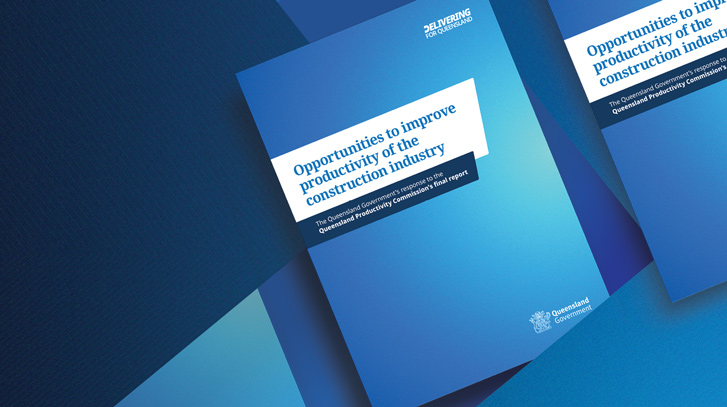
The Queensland Government is committing to landmark reforms to boost productivity in the construction sector after an independent report called for an ‘industry reset’.
The Queensland Productivity Commission’s (QPC) final report revealed construction industry productivity in the state had declined by 9 per cent since 2018, equating to 77,000 fewer new homes.
Labour productivity in the construction industry had increased just 5 per cent in the past 30 years compared to 65 per cent in the market economy over the same period.
The QPC also projected Best Practice Industry Conditions (BPIC) would cost Queenslanders up to $20.6 billion over the five years to 2030, with fewer homes built and entrenched higher rents.
The Queensland Government has agreed or agreed in principle to 51 of the QPC’s 64 recommendations, including:
- permanently removing BPIC from procurement policy
- removing pre-qualification for sub-contractors on government construction projects
- reducing administrative burden by removing policies that add complexity to the procurement process and removing barriers to innovation and competition
- providing greater guidance on health and safety regulation, including mechanisms for dealing with Work Health and Safety disputes and the use of right-of-entry provisions
- reviewing regulator powers in conjunction with the Wood Commission of Inquiry
- introducing a less prescriptive and better targeted policy to boost the number of construction apprentices
- reviewing available training courses to ensure skills needed for modern methods of construction are appropriately represented.
- progressing Queensland’s participation in the Automatic Mutual Recognition scheme and streamlining the licensing process for migrants.
The Queensland Government carefully considered all recommendations and is adopting a whole-of-government approach to address declining productivity.
The Government’s response to the final report will improve productivity by reforming procurement, improving land use and building activity regulation and aiding labour market operation.
Work will continue across government to prioritise and coordinate the implementation of the recommendations and further targeted consultation with stakeholders will be undertaken where required.